The main trap of vibe coding: the faster the AI writes, the faster your product breaks
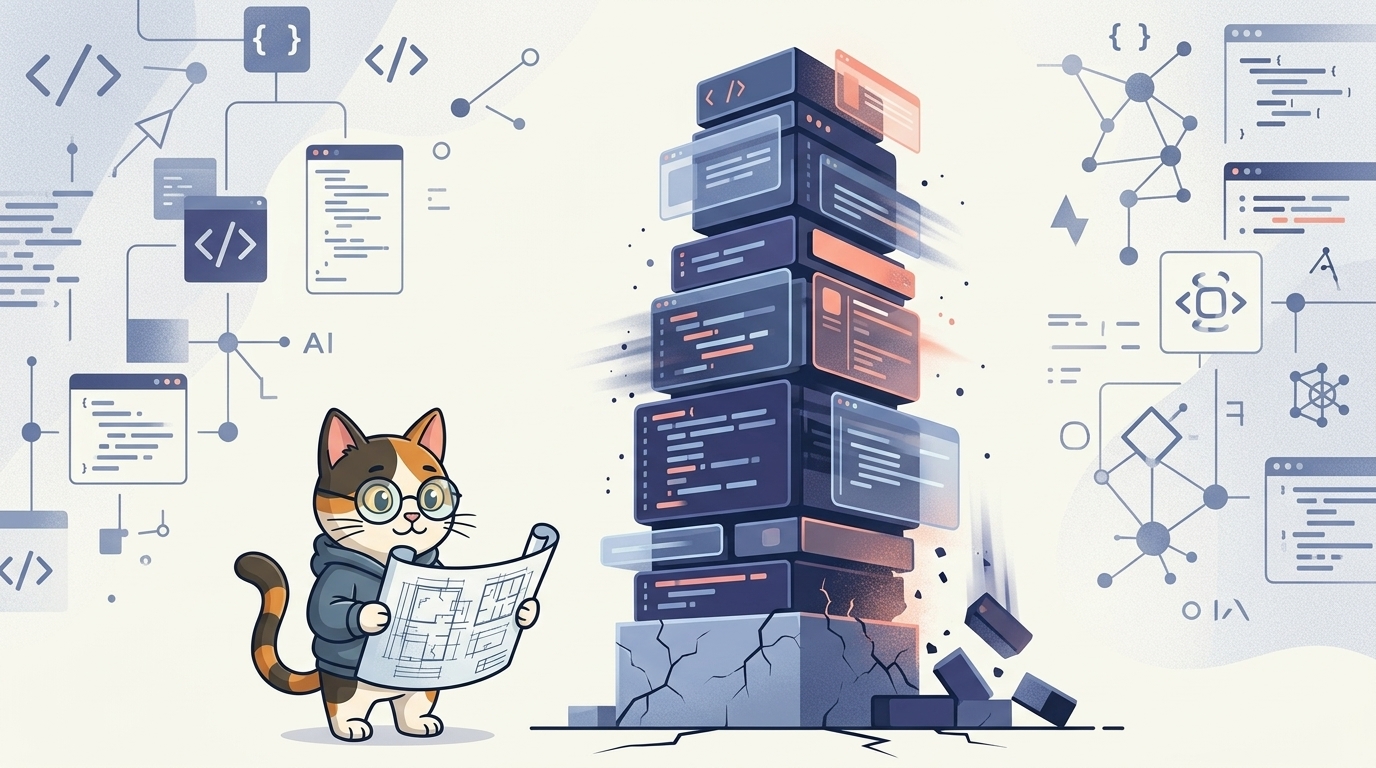
I think I've figured out the core difficulty of working with AI in development.
It's very fast. And that's the trap.
If I missed something at the start, the AI generates a large amount of code on top of it in no time. And by the time you realize an important detail was overlooked, it's already too late — too much is wired into it.
And this is no longer a small thing you can fix in five minutes. Rolling it back is expensive: it's not "rewrite one function," it's rebuilding a whole approach — say, the auth scheme or the migration strategy the project is wired into. It can lead to critical bugs or quiet degradation of the project. And while that happens, product development stops completely, and fixing the problem or the wrong decision can take days or even weeks.
You might assume there are pull requests — and you could use them to catch problems like this. But when you're staring at hundreds of lines of finished code, your attention goes to checking what's written, not what wasn't accounted for. So the problem can slip through even at review.
And here's the key shift. Generation speed has moved the bottleneck: writing the code used to be the expensive part; now it's not thinking hard enough before you start.
So one of the most important findings in working with AI is this: it's not about "writing prompts and generating code faster," but the habit of investing far more effort into planning and into the tooling around development.
A good plan for a task, for me, contains:
- The original problem — what exactly we're changing and why
- Possible solutions — the options I considered
- The chosen solution — what I landed on and why
- A checklist of steps — implementation stages in order
- The final picture — what the end change looks like, so I know upfront where it's heading
- Impact of the change — what shifts for the operator (the AI user) and what shifts for the product's users
- A short summary of the plan — problem, solution, and outcome in a couple of lines, so the gist is graspable fast once the plan grows large
But writing the plan once isn't enough. You need to walk through it several times — each pass surfaces something the previous one missed.
And better still — don't review everything alone. I bring in agents that review the plan and the context each from their own angle: security, architecture, product, bugs, CI. One looks only at architectural risks, another at product consequences, a third at whether the pipeline breaks. That way a detail gets caught from multiple sides, not just where I happened to look myself.
It sounds like unnecessary bureaucracy. But that's exactly what separates a quick fix from the situation where one overlooked detail stalls product development for a long time.